Physical Address
304 North Cardinal St.
Dorchester Center, MA 02124
Physical Address
304 North Cardinal St.
Dorchester Center, MA 02124
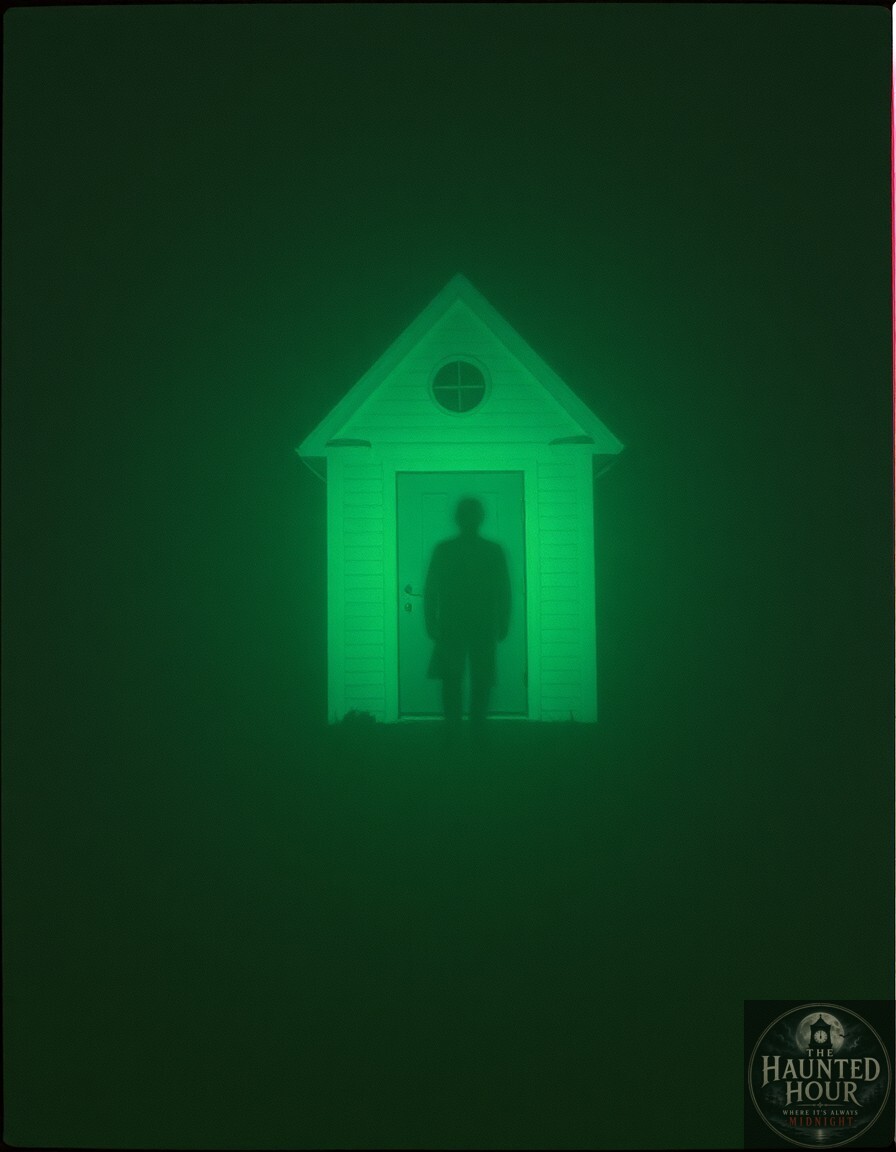
After several weeks, they found him. His abandoned body lay in the remote woods, miles from civilization. The autumn nights had been below freezing and the days barely above. The elements had slowed decomposition and preserved his corpse.
They could still see his features; his glazed eyes were intact. One side of his face had been nibbled away to reveal telltale pieces of bare bone. His gray skin had receded around his fingernails and made it appear they had grown. As the coroner, he didn’t like the looks of it. Not at all.
He’d seen similar dead bodies in several fields through the years. There weren’t any suspects and the culprits were never apprehended. Yet, somehow, the chief would never deem it a serial killing.
It was because of the victims. Always loners, unpopular and often disliked. There was no reason to shelter the lunatic who enacted such atrocities, no matter how much the community disliked the individual. The chief would fire him if he said it, but it was absolutely true.
The body’s abysmal eyes looked far away into eternity. The hopeless voids pleaded for help; they would forever beseech something that would never happen. His broken glasses still held to the bridge of his nose. Their coke-bottle lenses magnified the damage above.
The newspapers craved such an exploitable crime. They went into a shark’s frenzy with the juicy details. Their opinions about who and why were customarily carried out in a brutal manner. Who were his enemies? Who hated him enough to kill? Speculation became fair game and neighbors became celebrities.
As with every murder, there came hundreds of leads, opinions, and possibilities, none of which held any substance. It was the idle chatter of town gossips, new wine in old bottles to most. The same old story where the town outcast disappears and ends up the victim of foul play.
It had happened too many times in their town, if only he could figure out who was doing it all.
He watched detectives run on red herrings and always return empty. He knew all too well what had really happened. None of the neighbors had taken the time to know Howard before. The grieving people wished to wear their shame in silence.
In truth, they didn’t want to be anywhere near him when he was alive.
Those acquainted with Howard were respectfully tearful. A few were sincere, however most weren’t. His funeral was a subtle occasion to parade around in new clothes and test acting abilities. They weren’t sad over Howard’s death; they were never close to him. Most were secretly relieved they wouldn’t have to hide from him when they were outside.
Those rueful few only mourned a loss of life, as they would a stranger.
They whispered as his coffin was lowered; the closed lid left curiosity to haunt the room. How did he die? While many knew it was brutal, few had bothered to read the details. They relied solely on the grapevine and shunned the newspaper reports. Reading about Howard consumed more time than they cared to invest.
Howard Newt had always been a different man. In his introversion, he appeared sneaky, almost conniving. His thick glasses with the brown plastic frames and his polyester clothing made his acquaintances assume he was merely an object of pity, not a real person.
Howard was invited to parties and informal dinners out of pity. No one wanted the community to think of them as hard or callous. Howard was the token outcast. The social graces of his hosts were those of morticians, all plastic smiles and empty eyes. Their condescending voices came from fake people, vacant of any substance.
The other guests never explained why they left parties so early, and the host of the gathering wouldn’t tell Howard where the actual party was. Where everyone went when they went out the front door and got into their cars.
Usually, to the nearest hotel or bar.
Perhaps no one was comfortable with Howard. His eyes always darted nervously about behind those thick lenses. His dark hair was slicked down in an unfashionable manner. He wasn’t fashionable; he wasn’t trendy. In communities like his, people like that were always shunned.
Howard had always dreamed of being the life of the party, the one everybody looked forward to seeing. The one everyone anticipated coming so the party could begin. The man the ladies were crazy over.
He wanted women to notice him, to look at him adoringly. He longed for the charm of Burt Lancaster and the cool manner of Clark Gable. He wanted a long line of women waiting for his attention.
In life, he repelled women. They avoided him at all costs. It was as though he had been knighted “The Creep,” for all women called him that. It was his curse, that name. It was his mark of the loser, his brand of fate.
He loathed that word.
You creep.
He hated hearing it from anyone, even if it was directed toward someone else.
Hey, you stupid creep.
He felt the icy fingers of the word dig into his ears and send little shocks across his brain. It was the worst word in the world.
You stupid creep.
He heard it in his nightmares.
It reminded him of a snake. A snake that everyone hated and talked about. A slithering, creeping, vile thing. He felt a strange rage every time he heard it. It boiled and churned; he heard the word over and over in his mind. He heard it until his head felt like it would explode with such force it would take the house with it.
He wanted to hit something when he heard it. Just beat the life out of something or someone, just punch and punch; he couldn’t stop it. His furniture usually took the beatings, unless he was in his car. Then the dash was pounded until his fingers were swollen and bleeding.
He went to the mailbox one day as he usually did. The neighbors hid by cars and behind bushes until the threat passed. He knew; he had accepted his peers’ opinions of him. It was just the way his cookie crumbled.
Always had been.
He found a strange envelope among the bills and junk mail. It was a parchment envelope sealed with black wax. Oddly, it had no postal markings whatsoever. His name and address had been written in calligraphy by a very experienced hand.
He walked through the front door and opened the unusual piece of mail. There was a very old letter stuffed inside, or one which appeared to be old. It requested his presence at a formal party that celebrated the approaching autumn.
He was thrilled, ecstatic beyond any comparison. It was a formal party and they requested his presence at the stately event with an invitation. He smiled widely at the thought of someone going to all that trouble over him. He felt his eyes well with tears of joy as he sat back down on the sofa.
It was remarkable; it was exciting, and it was for him.
He silently thanked the author. It wasn’t just a “You wanna come?” at the last minute. It wasn’t slung over someone’s half-interested shoulder while they were walking their dog or washing their car.
It was an honest-to-God invitation sent to him long before the event.
It was scheduled for two weeks later, and he breezed through that time overtly happy. People seemed to notice a change in his demeanor, a lift in his step and the laughter in his eyes. He didn’t care.
He was invited.
He was important to someone, and that was all that mattered.
Two weeks passed, and he was surprised at the swiftness of time. Usually, when he looked forward to an event, it crept by. Time was never his friend.
Not at all.
He got into his car and carefully followed the directions. This was an event he didn’t want to miss. He was important and wanted by someone. He drove through the back roads and byways. The remote road wound and stretched out. Behind him, the sky grew darker as night approached. He worried he would miss the party.
He made the final turn and was disheartened. It was another long stretch of nothingness. A vast array of trees circled the small gravel road. Rocks popped and flew from beneath his tires. After the next turn, he would go back home; he couldn’t find it.
He rounded the turn and noticed a field ahead of him. Inside that pasture was a large circle of forest. A massive bonfire blazed within the woods. Hundreds of people danced and laughed around the roaring fire.
He was enamored by just the sight of it. He pulled closer and barely noticed the absence of any other vehicles. The meadow was flat and the tall grass scraped and fell beneath his car. He grew closer, but didn’t see anyone who looked familiar.
He parked the car in front; he didn’t care if it looked strange.
He was the guest of honor.
He approached the entrance to the wooded area. He lifted his legs high to avoid being engulfed by the weeds. He stepped over the rye and the briars; he was lucky not to catch his polyester trousers on the prickly weeds.
The group moved quickly, everyone to their own tune. Although the drums were loud, the beat was missed.
“Howard!” an unfamiliar masculine voice yelled.
He turned to see a large man in a mask.
“Oh, Howard!” a female voice yelled beside him.
She whirled and planted a kiss on his cheek. He blushed and the woman laughed. She wore the same type of mask as the man.
“Didn’t anyone tell you it was a masquerade, Howard?” she purred breathy words into his ear as she reached out with her other hand to offer a mask.
The plastic Mardi Gras masks only covered from nose to forehead. Howard was given the mask of a jester, with purple, green, and gold colors.
The woman turned.
“Hey, everyone, the fool has arrived!”
The crowd grinned when they glanced at him.
Greetings came from all directions and it was impossible for him to keep up with the onslaught of voices. People were everywhere, and he didn’t see anyone he knew.
Yet, they all loved him.
It wasn’t the fake warmth he’d experienced at all those other gatherings; it was genuine acceptance and adoration.
He’d never felt it before.
A large man stood upon an ancient stump and yelled to get the attention of all present. He smiled at Howard and then addressed the mob.
“Everyone, I would like to announce that the fool has arrived!”
In an instant, the music stopped, the dancing stopped, the revelry halted, and bodies stood motionless. A strange silence circled the woods.
“Here’s one for the fool,” came a voice behind Howard as something slammed across his forehead.
Shocked and stunned, he looked back up. Everyone smiled at him and he didn’t know why. He stood back up and stopped.
What was going on?
Their hands slowly went to their masks. The pieces of colored plastic and faux feathers were removed.
He held his breath in horror at the motley crowd before him, all with such damage to their faces. He couldn’t scream or run. He somehow knew what they were and why he was there.
He stared at one dead face after another; they all grinned too widely. He wanted to sprint away, to shriek at the monstrous atmosphere and the ghastly faces that crowded around him.
“We love the fool,” claimed one man with another blow.
Howard fell again.
“I have loved only fools,” said the woman as she pounded a log against his temple.
“I am the fool!” came a roaring man with a massive body.
The last person Howard Newt heard was a man who declared:
“The Fool is dead! Long live the Fool!”
In that moment, Howard knew what his party was. The gathering fit perfectly with his life. He would always be the life of a party with others who were known as “the creep.”
He finally found himself.
He was not the creep; he was the fool.
As the blows returned again and again, he knew there was something much worse than being called “The Creep.”